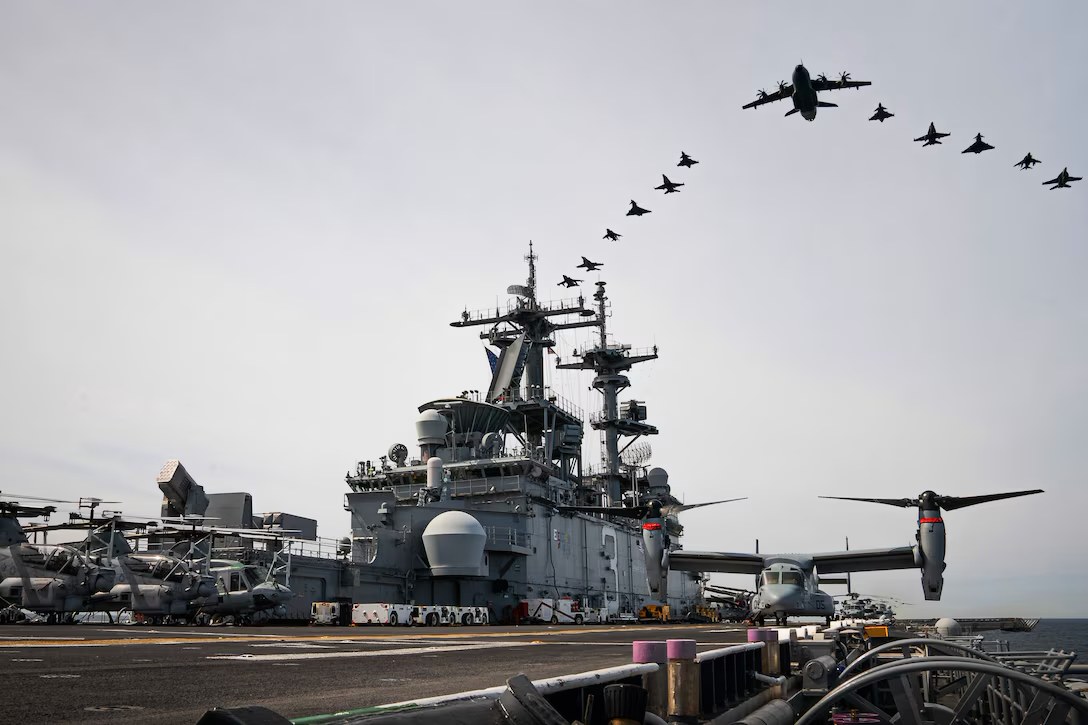
A new geopolitical theater is thawing, literally and figuratively. The Arctic has long been understood and appreciated as an arena of military competition, pitting great power rivals as physically close to each other as anywhere else. Yet in a world seeking energy abundance and holding current supply chains under scrutiny, where energy is playing a strategic role in nations’ toolbox for statecraft, the Arctic remains overlooked and underprotected in this domain. Its vast energy infrastructure increasingly powers Europe, quietly shifting its dependencies North, following not-so-quiet reductions in Russian dependency. This paper will argue that in Europe’s efforts to decouple from legacy supply chains, it must be aware of its shift North and, accordingly, work to include that energy infrastructure in its Arctic defense. Firstly, this article will lay out the energy landscape in the North, outlining the intricacies of the pipeline gas and LNG dependencies, as well as the electricity layer powering Europe and the competitive landscape of critical mineralsFollowing that overview, this article will examine their vulnerabilities from both the environment and from sabotage, and ultimately determine the gaps that need to be filled in current policy and institutions to adequately secure Europe’s energy infrastructure.
One cannot fully understand the role the Arctic plays in powering Europe without first mapping the energy infrastructure undergirding this dependency. Though reservoirs remain untapped and further projects continue to develop, the landscape is best understood through Norwegian gas, Russian LNG, the electricity layer, and an emerging flow of critical minerals. There certainly is no shortage of energy sources for Europe to work with, but many of them keep the continent physically tethered to the North.
Following Russia's invasion of Ukraine, and Europe's abrupt decoupling of Russian gas, Norway quickly emerged as the alternative supplier. As of 2025, Norway provided a third of all EU gas imports, and roughly half of EU pipeline imports 1 2. According to Gassco’s figures, 114.9bcm of gas was delivered via Gassco pipelines (Norwegian gas operator), equivalent to ~1,271 TWh. One of the key pipelines is the Snøhvit → Hammerfest chain, a 143 km pipeline with no surface installations 3. The Hammerfest LNG facility alone processed roughly 2% of EU demand, supplying ~6.5bcm/year, as Europe's first LNG export facility 3 4. The Snøhvit Future electrification project will extend this facility's output toward 2050 5. According to the Norwegian Ministry of Energy and Norwegian Offshore Directorate 6, 54% of Barents Sea resources lie in areas not currently open to petroleum activity, with estimates of 2,190 million Sm³ o.e. (standard cubic meters of oil equivalent) still untapped, further underscoring the persistent relevance of this region 6.
Remaining in the world of gas, it is imperative to acknowledge the continued role of Russian Arctic LNG even past the public pipeline gas cutoffs in 2022. Figures from the first half of 2026 show that "Yamal LNG," one of Russia's primary LNG export hubs, sent 136 of 140 cargoes (97%) to EU ports, equivalent to roughly 9.97Mt and €5.96 billion 7. These shipments primarily went to Zeebrugge, Dunkerque, and Montoir 7. Admittedly, the figures this year are slightly elevated as buyers maximize long-term-contract volumes before the Jan. 1, 2027 EU ban on Russian LNG, but they nevertheless underscore Europe's continued energy entanglements with Russia. While the region is undoubtedly a central hub for Russia's domestic energy needs, its implications on European supply chains cannot be overlooked.
Beneath this layer of pipelines and ships is the electricity layer more directly tethering the power relationships among European countries, particularly in the North. In 2025, Norway generated 161.8 TWh of electricity, 145.5 TWh (90%) of which came from hydropower 8. With over a thousand reservoirs 9, this storage works like a giant battery, offering Europe a flexible power supply. Operated with subsea cables, NordLink carries 1,400MW over 620 km to Germany, North Sea Link carries 1,400MW over 720 km to the UK, and NorNed carries 700MW over 580 km to the Netherlands, helping power their grids when wind and solar dip 10 11 12. Viking Link is another important cable network in the region, though it carries Danish wind 13. Nevertheless, these long and expensive cables lying exposed on the seabed are what ultimately power many of these countries, and subsequently secure continental grids.
Lastly, an emerging layer is forming around the renewed attention on critical minerals meant to power the energy transition, where the Arctic offers a unique opportunity to decouple from China's dominance. Greenland holds 25 of the EU's 34 critical raw materials, with key deposits of rare earth elements (REE) in Tanbreez and Kvanefjeld 14 15. Sweden sits on roughly 2.2 Mt of REE oxides in Per Geijer, with Norway holding claim to the largest known deposit in Europe, with 15.9 Mt of total rare earth oxides (as of March 2026) in Fen near Oslo 16 17. The key distinction here is that these deposits do not have associated mines, nor processing facilities, nor any ultimate manufacturing capability. It is Finland that holds Europe's first lithium mine-to-refinery chain, producing at a rate of roughly 15,000 tons/yr of lithium hydroxide starting in February of this year 18. Most of the output from these other large deposits, though, is only estimated to land in the next decade, so China's processing dominance is expected to persist until then. Nevertheless, it is worth noting the potential that this region holds in addition to the already expansive network of gas, LNG, and electricity interconnection physically linking Europe's energy security to the Arctic.
Having established Europe's vast energy network in the Arctic that is only expanding, the exposure this carries becomes increasingly important. The main sources of this risk are the concentration of nodes on long networks, the physically exposed infrastructure, Russia's capabilities, and climate change, multiplying each other's effects and compounding exposure to Europe's energy security.
Norway's state-owned gas operator Gassco manages roughly 8,600 km of pipe, over an extensive network that can reroute gas around any broken pipe, allowing it to claim 99.6% reliability 19 20. Langeled, one of its longest, lies at just over 1,100 km. The exposed node lies in the processing plants where many of these pipelines meet, the largest of such being Kårstø, Nyhamna and Kollsnes, which cannot be rerouted around 19. An interruption there can be significant, as was proven in June 2024 when the Sleipner outage shut down Nyhamna, and the European benchmark gas price rose 7.2% in one day 21. A single node was able to have a continental effect. Admittedly, losing one facility does not necessarily constitute a crisis, especially given recent improvements in European LNG redundancy serving 242 bcm/yr 22. Nevertheless, it highlights the strategic distinction between an extensive network and few centralized nodes, and the inherent risk that carries to limit flexibility and weaken resilience.
The subsea is particularly vulnerable because it is where accidents and sabotage look the same. It is undeniable that, by virtue of the environment, undersea cables and pipelines do break by accident. According to the ICPC, of the 150-200 annual cable faults, approximately 75% stem from accidental human activity 28. That is precisely what makes sabotage attractive: a deliberate fault looks like an accident, and proving otherwise carries a high burden of proof. Confirming damage and identifying vessels is rather straightforward, but establishing and proving ultimate state responsibility is where most of the cases get held up. In October 2023, a Chinese ship's anchor dragged along the BalticConnector gas pipeline and cables, ultimately leading to the captain's arrest 23. In November 2024, two Baltic telecom cables were severed when the Yi Peng 3 dragged its anchor for 180nm 24. Most prominently, in December of that same year, the notable EstLink 2 power cable (a 145 km long cable delivering 650 MW of electricity), was dubiously damaged, and the tanker Eagle S was seized in relation to it 25. The Finnish court ultimately dismissed the case on jurisdiction 26, but the fact remained that this critical cable was out for months. For a system that carries 99% of intercontinental internet traffic 27, which energy systems depend on for monitoring and control, tampering becomes not only likely but strategic.
A country that has shown no hesitation in such tampering conveniently also takes up over half of the Arctic coastline. Since February 2022, ICCT 29 confirmed 151 confidently attributable Russian hostile hybrid operations in Europe. Recent news about attacks on German energy infrastructure have been consuming headlines, but even indexing solely on official Norwegian and NATO assessments, we see that Russia has the means (special deep-sea units, surveillance ships, fishing vessels), and a track record, to expose the vulnerabilities of Europe's energy infrastructure. From its behavior in Ukraine alone, where 2025 saw 1,225 strikes on Ukrainian energy infrastructure with over $20 billion in damage on the grid, we see a state that treats infrastructure disruption as an integrated part of its hybrid toolbox, aimed at destabilizing societies 30. As NATO ASG Ellermann-Kingombe said, "European energy infrastructure is a priority target for Russia" 31. Norway's Police Security Service 2026 Threat Assessment even concluded with the expectation of continued Russian reconnaissance of Norwegian critical infrastructure through covert intelligence activity from civilian vessels 32. Norway has separately also sanctioned two Russian fishing companies over surveillance of undersea infrastructure 33. As recently as September 10, 2026, this sentiment was confirmed when it was reported that Norway, the U.K., and the U.S. thwarted a covert Russian GUGI (Main Directorate for Deep-Sea Research) operation that simulated the deployment of deep-sea technology designed to disable critical undersea cables near the Norwegian archipelago of Svalbard 34. For context, Svalbard hosts critical 1,400 km fiber-optic cables supporting SvalSat (one of the world's largest satellite ground stations) and GUGI is a highly secretive branch of the Russian military functioning as underwater special forces operating specialized deep-diving submarines and uncrewed submersibles. These coexisting forces make such conflicts not a matter of if, but when.
As with any conversation about the Arctic, the monumental impact of climate change cannot be overstated. In this case, the developing physical environment that the energy infrastructure is situated in is itself a multiplier of risk to Europe's energy security as a whole. With rapidly rising temperatures, sea-ice decline is bringing about longer navigable seasons, enabling more vessels near critical infrastructure, ultimately proving to be a larger surveillance burden. Natural disasters moving outside original design assumptions also bring about further uncertainty, and the higher average runoff coming from it creates further variability among the hydropower resources. According to Hjort et al. 35, roughly 70% of current Arctic infrastructure will sit in high thaw-potential permafrost by mid-century. Admittedly, permafrost thaw mostly threatens the Russian side, as was seen in Norilsk in 2020 when thaw was attributed as the culprit of the roughly 21,000 tons of diesel released after tank subsidence36. Nevertheless, the paradox stands that a more usable Arctic becomes a bigger security problem.
The key challenge is not that any one asset is uniquely fragile. In the Arctic, spotting an attack, proving who did it, responding, and fixing the damage, are all unusually slow and complex, which makes these scattered vulnerabilities a genuine strategic problem. We established that Europe's energy supply chains are inextricably tethered to the Arctic. The remoteness, the long subsea assets, the concentrated nodes, Russian capabilities, ambiguous attribution, climate accelerants, and scarce repair capacity, make precisely this energy infrastructure all the more vulnerable and exposed.
With Europe pivoting its energy infrastructure to the North, this new environment (both physically and geopolitically) presents an urgent opportunity to recognize its strategic importance and consequently act to fortify it. The High North is already a security theater, and institutions exist for its protection. The responsibility now is to make sure Europe's crucial energy infrastructure is included.
The EU Critical Entities Resilience Directive treats critical infrastructure as part of a cross-border, interdependent network, and requires it to be assessed against natural hazards, hybrid threats, and sabotage 37. As previous sections of this paper detailed in length, Norway's cables cut across the High North and interconnect the UK, Germany, and the Netherlands (among others). Their similarly connected pipelines require ports, vessels, and power to run and be repaired. One national outage or a break in the node inherently hits several states. They are, without a doubt, critical infrastructure worth protecting.
What does protection actually mean in this context? With seven of the eight Arctic states being NATO members and the EU rapidly mobilizing resources, it would be misleading to suggest that no such protection exists so far. Whether it be preventing and detecting attacks, attributing responsibility, responding to aggressions, repairing damages, or maintaining the infrastructure, there are a number of institutions and policies already at play worth cataloguing, especially to highlight the remaining gaps they have in adequately addressing the vulnerabilities of the energy infrastructure.
The most notable effort in this space is NATO's Arctic Sentry, a multi-domain military initiative launched in February 2026, modeled after their successful Baltic Sentry program 38. Both of them serve to coordinate maritime patrols, air policing, and national exercises like Norway's Cold Response and Denmark's Arctic Endurance, although being military in nature, they cover energy security issues 39. More explicitly, NATO's Energy Security Center of Excellence provides dedicated staff (both civilian and military) towards the study of this issue, and how energy security over the whole of the alliance can be strengthened. A stronger focus on the Arctic as it emerges will be pivotal to ensure NATO remains prepared and alert. A key challenge in operationalizing this focus is that, for example, fitting military sensors to civilian pipelines for better detection could in turn weaken their protected civilian status and be legally justifiable for attack by adversaries as military infrastructure. The Article 5 commitments are already ambiguous with attribution difficulties, and navigating these discrepancies will be important. On the civilian side, the EU Cable Security Action Plan from February 2025 offers €347 million for 2026-2027 to strengthen its cable vessel reserve, where the global fleet currently stands at approximately 60 aging ships dispatched around the world, and 20 of them addressing crucial subsea cable faults 27 40 41. The conversations are undoubtedly here. The EU is working to fund infrastructure resilience, and NATO is adapting to secure the environment, but few are treating the increasingly important northern energy infrastructure as one system spanning both. Denmark in particular has taken action to better secure the region through Greenland, partnering with the U.S. to amend the 1951 defense agreement between the three powers on September 22, 2026 42. Nevertheless, such an amending of an existing agreement does not change the tethered nature of energy and defense in the region.
Certain developments can safely be assumed, even if the extent of them is rightly debated. The energy transition is and the move toward renewables and alternative fuel sources is not abating. The Arctic is being understood as strategic geography, and militarization is increasing across all the stakeholders in the region. The energy resources and commodities are abundant and varied in the region. Gray-zone tactics against energy infrastructure and hybrid warfare will continue to be a tool employed globally by aggressors. The constellation of these seemingly inevitable forces safely demonstrates that the Arctic will not be leaving our headlines any time soon. Being a unique area where these forces converge means that securing Europe’s energy infrastructure in the Arctic will be not only important, but urgent. Having determined the ubiquity of pipeline gas, LNG, electricity infrastructure, and an emerging layer of critical minerals, an increasing European energy dependence on the Arctic becomes apparent. A rapidly changing environment and prolific sabotage expose that infrastructure, which is a critical vulnerability that NATO and the EU must recognize and act swiftly to protect.
1. Council of the European Union, “Where Does the EU’s Gas Come From?” Infographic, https://www.consilium.europa.eu/en/infographics/where-does-the-eu-s-gas-come-from/.
2. Eurostat, “EU Imports of Energy Products – Latest Developments,” Statistics Explained, 2026, https://ec.europa.eu/eurostat/statistics-explained/index.php?title=EU_imports_of_energy_products_-_latest_d evelopments.
3. Equinor, “Snøhvit,” https://www.equinor.com/energy/snohvit. ↩
4. Equinor, “More LNG for Europe,” September 23, 2025, https://equinor.com/news/20250923-askeladd-vest-more-lng-for-europe.
5. Equinor, “Governmental Green Light to the Snøhvit Future Project,” August 8, 2023, https://www.equinor.com/news/20230808-governmental-green-light-snohvit-future. ↩
6. Norwegian Ministry of Energy and Norwegian Offshore Directorate, “Resources per Sea Area,” Norwegianpetroleum.no, updated March 4, 2026, https://www.norskpetroleum.no/en/petroleum-resources/resources-per-sea-area/. ↩
7. urgewald, “EU Paid an Estimated €5.96 Billion for Russian Arctic LNG in the First 6 Months of 2026,” press release, July 13, 2026, https://www.urgewald.org/en/media/eu-paid-estimated-eu596-billion-russian-arctic-lng-first-6-months-2026. ↩
8. Statistics Norway (SSB), “Høyeste strømproduksjon noensinne,” 2026, https://www.ssb.no/energi-og-industri/energi/statistikk/elektrisitet/artikler/hoyeste-stromproduksjon-noensinn e-05052026. ↩
9. Energifakta Norge, “Electricity Production,” https://energifaktanorge.no/en/utskrift/. ↩
10. European Investment Bank, “EIB Completes Financing for NordLink with Statnett,” press release 2017-139, 2017, https://www.eib.org/en/press/all/2017-139-eib-completes-financing-for-nordlink-with-statnett.
11. National Grid, “North Sea Link,” https://www.nationalgrid.com/national-grid-ventures/interconnectors-connecting-cleaner-future/north-sea-link .
12. Hitachi Energy, “NorNed,” customer story, https://www.hitachienergy.com/about-us/case-studies/norned.
13. National Grid, “Viking Link,” https://www.nationalgrid.com/viking-link. ↩
14. Reuters, “Factbox: Greenland’s Rich but Largely Untapped Mineral Resources,” Mining Weekly, January 14, 2026, https://www.miningweekly.com/article/factbox-greenlands-rich-but-largely-untapped-mineral-resources-2026 -01-14.
15. S&P Global Mobility, “Greenland’s Mineral Edge: Opportunity and Obstacles,” AutoTechInsight, https://autotechinsight.spglobal.com/news/5286363/greenlands-mineral-edge-opportunity-and-obstacles.
16. LKAB, “LKAB Reports Improved Mineral Resources,” press release, March 30, 2026, https://lkab.com/en/press/lkab-reports-improved-mineral-resources/.
17. Reuters, “Rare Earths Norway Says Estimate of Europe’s Biggest Deposit Jumps 81%,” ArcticToday, March 3, 2026, https://www.arctictoday.com/rare-earths-norway-says-estimate-of-europes-biggest-deposit-jumps-81/.
18. Mining Weekly, “Keliber Lithium Hydroxide Project, Finland – Update,” September 4, 2026, https://www.miningweekly.com/article/keliber-lithium-hydroxide-project-finland-update-2026-09-04. ↩
19. Gassco, “Continuously Delivering,” last modified May 7, 2026, https://gassco.eu/en/about-us/who-we-are/celebrating-25-years/continuously-delivering/. ↩
20. Gassco, “Facts about Gassco,” last modified September 7, 2026, https://gassco.eu/en/about-us/what-we-do/facts-about-gassco/.
21. Reuters, “Norway Outage Pushes European Gas Prices to Highest This Year,” Malay Mail, June 3, 2024, https://www.malaymail.com/news/money/2024/06/03/norway-outage-pushes-european-gas-prices-to-highest-t his-year/137940. ↩
22. European Commission, “Liquefied Natural Gas,” Energy, https://energy.ec.europa.eu/topics/carbon-management-and-fossil-fuels/liquefied-natural-gas_en. ↩
23. ERR News, “Newnew Polar Bear Captain Arrested in Hong Kong over Baltic Sea Cable Break,” edited by Helen Wright, 2025, https://news.err.ee/1609689143/newnew-polar-bear-captain-arrested-in-hong-kong-over-baltic-sea-cable-brea k. ↩
24. Associated Press, “Swedish Report Finds No Evidence a Chinese-Flagged Ship Intentionally Damaged Baltic Sea Cables,” Yahoo News, April 15, 2025, https://www.yahoo.com/news/swedish-report-finds-no-evidence-093006789.html. ↩
25. Fingrid, “EstLink 2 Electricity Transmission Link between Finland and Estonia Has Failed – Investigation Continues,” December 2024, https://www.fingrid.fi/en/news/news/2024/estlink-2-electricity-transmission-link-between-finland-and-estonia -has-failed-investigation-continues2/. ↩
26. Kyiv Independent, “Finland Court Drops Case against Russian ‘Shadow Fleet’ Crew Accused of Undersea Cable Damage,” October 3, 2025, https://kyivindependent.com/finland-court-drops-case-against-russian-shadow-fleet-tanker-crew/. ↩
27. European Commission, “€347 Million to Protect Europe’s Submarine Cables,” EU Blue Economy Observatory, February 11, 2026, https://blue-economy-observatory.ec.europa.eu/news/eu347-million-protect-europes-submarine-cables-2026-0 2-11_en. ↩
28. ICPC (International Cable Protection Committee), “Media Enquiries,” https://iscpc.org/news/media-enquiries/. ↩
29. ICCT (International Centre for Counter-Terrorism), “More of the Same. Russia’s Crime-Terror Nexus: Criminality as a Tool of Hybrid Warfare Revisited,” with GLOBSEC, February 2026, https://icct.nl/publication/more-same-russias-crime-terror-nexus-criminality-tool-hybrid-warfare-revisited. ↩
30. Anadolu Agency, “Energy Infrastructure in Ukraine Hit by 1,225 Attacks in 2025 as Damage Surpasses $20B,” February 16, 2026, https://www.aa.com.tr/en/energy/electricity/energy-infrastructure-in-ukraine-hit-by-1-225-attacks-in-2025-as- damage-surpasses-20b/54745. ↩
31. Caspar Hobhouse, “On a War Footing: Securing Critical Energy Infrastructure,” European Union Institute for Security Studies, August 25, 2025, https://www.iss.europa.eu/publications/briefs/war-footing-securing-critical-energy-infrastructure. ↩
32. PST (Politiets sikkerhetstjeneste), Nasjonal trusselvurdering 2026 (Oslo: PST, 2026), https://www.pst.no/wp-content/uploads/2026/02/Nasjonal-trusselvurdering-2026.pdf, 12–15. ↩
33. Barents Observer, “Norway Kicks Out Norebo and Murman Seafood in Fear of Intelligence Gathering,” 2025, https://www.thebarentsobserver.com/news/norway-kicks-out-norebo-and-murmansk-seafood/432942. ↩
34. Reuters, “Exclusive-NATO Allies Foil Russian Subsea Cable Sabotage Plot,” U.S. News & World Report, September 10, 2026, https://www.usnews.com/news/world/articles/2026-09-10/exclusive-nato-allies-foil-russian-subsea-cable-sabo tage-plot. ↩
35. Jan Hjort et al., “Degrading Permafrost Puts Arctic Infrastructure at Risk by Mid-Century,” Nature Communications 9 (2018): 5147, https://doi.org/10.1038/s41467-018-07557-4. ↩
36. Al Jazeera, “Russia Arrests Three People over 21,000-Tonne Diesel Spill,” June 10, 2020, https://www.aljazeera.com/news/2020/06/russia-arrests-people-21000-tonne-diesel-spill-200610134722065.ht ml. ↩
37. European Parliament and Council of the European Union, “Directive (EU) 2022/2557 of the European Parliament and of the Council of 14 December 2022 on the Resilience of Critical Entities and Repealing Council Directive 2008/114/EC,” Official Journal of the European Union L 333 (December 27, 2022): 164–98, recitals 5 and 15, art. 5. ↩
38. NATO, “Arctic Security,” https://nato.int/en/what-we-do/deterrence-and-defence/arctic-security. ↩
39. Dzirhan Mahadzir, “NATO Launches Arctic Sentry in High North in Response to Russian Activity,” USNI News, February 16, 2026, https://news.usni.org/2026/02/16/nato-launches-arctic-sentry-in-high-north-in-response-to-russian-activity. ↩
40. Data Center Dynamics, “The Cable Ship Capacity Crunch,” https://datacenterdynamics.com/en/analysis/the-cable-ship-capacity-crunch.
41. Mike Brookes, “Rear Admiral Mike Brookes Question for the Record Response,” submitted to the U.S.-China Economic and Security Review Commission hearing “Part of Your World: U.S.-China Competition Under the Sea,” 2026, https://www.uscc.gov/sites/default/files/2026-04/Rear_Admiral_Mike_Brookes_Question_for_the_Record_R esponse.pdf.
42. The White House, “AGREEMENT BETWEEN THE GOVERNMENT OF THE UNITED STATES OF AMERICA AND THE GOVERNMENT OF THE KINGDOM OF DENMARK TOGETHER WITH THE GOVERNMENT OF GREENLAND,” September 22, 2026 briefing, https://www.whitehouse.gov/briefings-statements/2026/09/agreement-between-the-government-of-the-united- states-of-america-and-the-government-of-the-kingdom-of-denmark-together-with-the-government-of-greenla nd-to-amend-and-supplement-the-agreement-of-27-apri/. ↩
Prefer the original layout? Open this essay in the PDF issue (p. 10) →