Hard power. It is defined, simply, by leverage in fields of economy and military, cash flow and force. It is raw power, although one of the two means of amassing it is less internationally legitimate than the other. Leverage militarily is coercion through threats, strikes, loss of life, damage to infrastructure. It is fundamentally destructive. Nonetheless, for much of history, the military has displayed power. Trade and economic power, however, builds a nation up without costing legitimacy1- it is for this reason most rising powers established the economy and justified the corresponding growth of the military due to the expanded cash flow. Not all nations can be Rome, expanding violently to amass wealth, rather, they expand wealth to expand militarily. Domains of economic expansion are endless, primarily, their channel is trade deficits, lending and borrowing, a strong domestic economy, innovation, and resources. The powers of production guide growing nations to their ascent through new technologies and monopolized resources; in this way, nations that mastered steam and railways grew powerful, and nations resting on oilfields grew rich. Nonetheless, there is an option that has throughout history combined both military and economic strategy. Colonialism, expansion, and exploration brought wealth from abroad home; managing the seas, straits, and chokepoints, as Iran notoriously has with the Strait of Hormuz, provides a clear example of taxation through navigation. It is this mastery of trade routes, the way the Dutch empire conducted the Spice Trade, and the way China conducted the Silk Road, that made nations wealthy. To control trade is not simply to control the economic flow of goods and have access to those goods and resources; it is also to hold a monopoly upon them. Consider for a moment if a nation that controls the majority of trade with the world, that is, the highest trading nation for nearly every other nation, simply cut off trade and hoarded the resources. Decrease supply, increase demand; price skyrockets.2 It is this very predicament that occurred when China restricted rare earth metals and critical minerals to the United States3 (US) in response to the 145% tariff imposition.4 The US has a response, however, isolating nations such as Iran with sanctions, tariffs, SWIFT restrictions5, and effectively icing the nation out of the world economy, which runs on the US dollar.6
Naturally, leverage is a tug-of-war, and economically it is no different. The US may control the digital infrastructure of the world's financial system; however, China seeks to control the world's physical trade. Such ambitions have been actualized in the initiation of the Belt and Road Initiative (BRI), which the world has watched closely.7
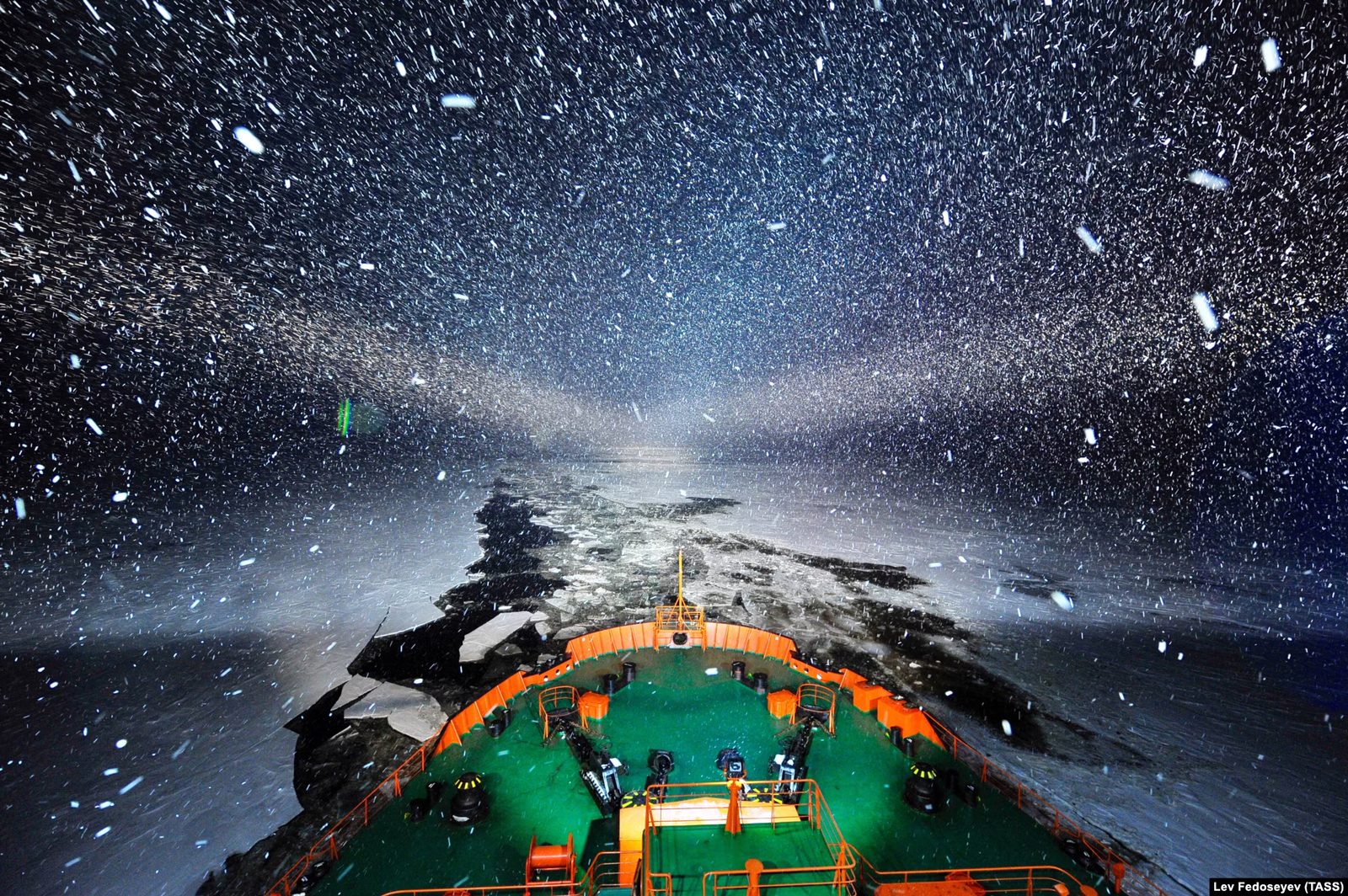
What the world has not observed as closely, however, is that which sits just atop it. On its head, as opposed to just under its nose; the Arctic. The Polar Silk Road is a Chinese ambition to master trade in the icy waters of the High North, in partnership with Russia.8 Russia lays claim to 53% of the Arctic coastline, and 40% of its land9; correspondingly, it issued seven permits for Chinese vessels to travel through the Arctic.10, 11 Imperatively, the northern pathway this opened for Chinese vessels12 dropped shipping times to merely 20 days.13 Before this route, shipping through the Suez Canal took roughly 30-40 days14, and 40-50 days for travel through the Cape of Good Hope.15 Nearly half the time spent shipping goods from China to Europe has been lost due to an agreement between a major trading nation and a major Arctic power. The result is a dangerous relationship between two ambitious powers, and an uncomfortable place for the United States.
To best analyze the costs and benefits for each nation involved in this deal, Russia and China, this article will observe the incentives and payoffs for each, respectively, as well as the overall ratio, and which nation the deal favors.
China provides critical manufacturing capacity, particularly for Russia, in terms of ice-class vessels16, which cannot be built effectively by Russia in a post-sanctions economy.17 This allows China to produce the hardware for the new channel of trade, where Russia depends upon existing fleets.18 In the short term, this provides Russia with access to its own domain through an alliance, but grants China practical dominance in the region. Additionally, China provides the capital for the infrastructure for the Polar Silk Road19 (also known as the Ice Silk Road)20; such a playbook China has utilized before, particularly in the Bay of Bengal littoral, wherein by owning the infrastructure China can control the utilization of that infrastructure.21 Similarly to the production and thereby ownership of ice-vessels, China is able to own ports, channels, and infrastructure necessary for trade in the Arctic.22 Therefore, China is granted unique leverage and power in the Arctic, particularly over its ally, Russia.
Furthermore, China can establish liquefied natural gas (LNG) projects which Western sanctions on Russia have foreclosed23, in such a way, China works as a proxy of Russia to work around Western sanctions. Such workarounds, in ships and energy, for Russia, are a critical way of surviving Western sanctions24. The final workaround produced by China is political cover. Russian expansion in the Arctic would be seen as- given the nation is engaged in an unfavorable war- aggressive. China, however, is known as a trade-based nation with a clear incentive to utilize novel trade routes. Europe can stomach Chinese infrastructure in the Arctic because it provides the European continent faster trade with the continent's major trade partner. Europe benefits from the Polar Silk Road (PSR) and is able to tolerate an expanding China25, whereas it cannot tolerate an expanding Russia, which would negate the role of the sanctions imposed. This in turn provides China facilities and legitimacy to establish an export market for LNG, nickel and palladium, after the EU market has shuttered.26
In exchange for these burdens, China gains a commodity supplier in Moscow; Russia has no alternatives for trade, and as such depends upon China.27 As such, China can manipulate costs as it sees fit. Simply put, it is easy to get a good deal when working with a nation without alternatives. Additionally, the access China gains to the Arctic through the PSR allows a low-risk hedge against pre-existing chokepoints that can be imposed upon China. Namely, the Malacca Strait, which funnels Chinese trade through a chokepoint controlled by the United States28, and retains a US Naval presence. As such, it is an insurance plan to slowly slip free of a chokepoint29, to allow China maximum freedom of trade without risking leverage to the United States. In exchange, in theory, it risks leverage being delivered to Moscow; nonetheless, if it controls the infrastructure and ships, as well as serving as Moscow's only trade partner, it is a significantly lower-risk trade. Additionally, this exchange of leverage does not require the contesting of sovereignty or construction of legal systems to implement China into another route. Given that the Arctic is unclaimed land, it permits Chinese freedom of trade without having to negotiate with other nations, merely Russia, who, once again, depends upon China.
Furthermore, it establishes increased Chinese legitimacy as a "near-Arctic state", which permits an expansion of Chinese patrols, seen in the nation's recent movements in the High North in conjunction with Russia.30 Such patrols and expansions mark the furthest north expansion by Chinese naval forces, establishing an enforcement to secure the economic pipeline in the Arctic.31 It is physical power supplementing economic power, compounding the influence China holds in the region.32 The forum of Arctic governance is established primarily between North American states (US, Canada), and Nordic nations, as well as Russia.33 Barrier to entry has thus far been predicated upon physical integration in the region34- China is attempting to expand access to the Arctic through trade, getting a foot in the door of Arctic governance politics.35 Lastly, the financing of the project, such as the Arctic LNG 2, has no real cost, as it exists as an insurance policy, not a grand plan.36 By opening the Arctic as an alternative, and not staking all of China's trade on it, it allows the gradual development of the region and China's influence in it; subtly, financially stably, and pragmatically.
Russia, by contrast, provides the bulk of the responsibility for the PSR, as the project runs directly through its domain.37 Russia, therefore, has the final word on the project, and serves as the sole issuer of permits to Chinese ships transporting goods through the Arctic.38 Primarily, Russia provides EEZ claims, establishing NSR basing from the Soviet era39, 40, as well as the functional insurance and security of the PSR, by providing the nearest support in case of any incidents. Furthermore, it provides the legal backbone of the PSR through the permits and SAR obligations41, while retaining the fundamental coastline- the actual land the infrastructure is built upon. Lastly, Russia provides discounted commodities as they are sold on Chinese terms, as the sole trade partner; however, these material sacrifices and obligations pale in comparison to the strategic exchange Russia made. Moscow sacrificed power and leverage with China by accepting a subordinate bargaining position, serving as the horse rather than the rider for an operation in its very own backyard. Such a position Russia would likely not have taken, particularly in relation to the EU, pre-2022; as Russia suffers under sanctions, a crippled economy, wartime pressures and an international struggle for legitimacy, it is forced to take what bargains it can. Such bargains as the PSR throw a lifeboat to Russia, at the cost of long-term obligation; China seeks to capitalize on Russia's weakened position, and this trade and the establishment of the PSR crystallizes it.
In exchange for this role, Russia gains an economic lifeline- provided with capital and buyers from China that are otherwise irreplaceable. Russia also gains the aforementioned ships and technology which it could not construct itself due to sanctions42, granting the nation continued access to polar waters. Lastly, Russia retains international recognition; China grants Russia a level of legitimacy in asking permission for the PSR, and following issued permits, by respecting Russia it gains easier access in negotiations, which benefits China, as well as a furthered appearance on the world stage as a true great power. China appeals to Russia's desperation and need for recognition by coming forth with a deal which seems to save Russia and grant it ultimate control over its own region, which China desires- it seems on the surface to favor Russia, providing ships and technology, legal power over China, and an economic lifeline. China serves as Russia's workaround for sanctions- and one may assume that such a deal benefits Russia. However, short-term gains for Russia do not negate the long-term power exchange that took place in the dealings of the PSR. China gains significant access to the Arctic, and in turn makes Russia pay for access to its own waters, as it cannot afford its own ice-class vessels.
Such an imbalance of power is marked clearly in an LNG buyer's extract from Moscow43: the discount of Russian crude and LNG to China is not a partnership discount but instead a captive-supplier price; without China buying Russia's energy, Russia starves economically. In 2022, Russian crude and LNG were sold to China at $15-20 per barrel.44 Figures from 2026 point to Russian ESPO, a high-quality crude blend, shipped from Russia's Pacific coast to China, dropping to merely $9 a barrel below ICE Brent futures45, while the cheaper Urals crude dropped to a mere $2 to $3 per barrel discount in some cases.46 Given the tightening of energy availability due to Russian sanctions and the closure of the Strait of Hormuz47, such access to Russian oil so cheaply is imperative to a manufacturing nation such as China during such a volatile period. So China can name its price- that is the tell of leverage more so than any infrastructure or vessel construction agreement48; it is a clear, quantifiable figure which encompasses Russia's relationship, trapped in its own Arctic Ocean, suffocated by its borders.
China / Russia: Gives and Gets
| China Provides | China Receives |
|---|---|
| • Ice-class vessels • NSR infrastructure capital • Infrastructure ownership • LNG project investment • Political cover • Export market for Russian goods | • Captive commodity supplier • Pricing leverage • Shipping time: ~20 days vs. 30–50 • Malacca Strait hedge • Access without sovereignty disputes • Near-Arctic state legitimacy • Naval patrol range • Route dominance |
| Russia Provides | Russia Recieves |
|---|---|
| • 53% of Arctic coastline • ~40% of Arctic land • Basing and legal apparatus • Permitting authority • Discounted commodities • Deference to China | • Capital and buyers • Shipbuilding substitute • Great-power status (subsidized) • Arctic relevance |
| Factor | China | Russia |
|---|---|---|
| Transit Days × Trade Volume | Outputs Velocity: Reduces shipping time from 30–50 days to merely 20 days. This time savings acts as a multiplier on total annual export capacity and drastically lowers per-voyage logistics overhead. | Inputs Geography: Unlocks the physical corridor through its sovereign claims and administrative permitting, but relies entirely on Chinese shipping volume to monetize the route. |
| Spot Price × (1 - Discount %) | Outputs Margin: Extracts massive economic value by dictating terms to a captive supplier, successfully securing sanctioned energy assets at steep discounts, such as a 40% reduction on LNG spot prices. | Inputs Distressed Supply: Trades maximum profit for sheer survival. Absorbs the steep discount multiplier as the necessary cost of generating liquid capital while frozen out of Western markets. |
| Sanctioned Assets × Tech Supply | Offshore Ownership: Leverages its unique position as the sole supplier of ice-class vessels and capital to convert upfront financing into permanent ownership of Arctic infrastructure and transit channels. | Inputs Raw Resources: Mortgages its future sovereignty and territorial control in exchange for the immediate technological workarounds required to keep its energy extraction operational. |
| Chokepoint Risk × Route Access | Outputs Strategic Autonomy: Drastically reduces its reliance on the US-monitored Malacca Strait. Every | Inputs Geopolitical Risk: Concedes an unprecedented level of access to a rising superpower on its northern |
| ton of cargo routed North multiplies China's insulation against global supply chain disruptions. | border, trading its historical geographic dominance for immediate economic backing. |
|---|
Prior to 2022, Russia was established as a major player in the energy market as well as Europe as a whole. The EU held direct concerns regarding Russia, in particular the energy it supplied the Union. It was this leverage that Russia possessed that led to the establishment of German-Russian projects to streamline gas pipelines, including Nord Stream 1 and 2.59 However, following the invasion of Ukraine and corresponding economic warfare, Russia was faced with a shuttered EU market, Arctic LNG 2 stagnation, and Rosatom, as well as shipping partners, facing secondary sanctions exposure.60, 61 In short, Russia went from a colossal player in European energy affairs to a minuscule, isolated one. Such endeavors were largely the result of US economic policy and influence; nonetheless, the EU took a more or less united stand against Russia and its war with Ukraine. The bargaining power possessed by Russia, to trade with either the EU or China, was a healthy diversification of demand62, resulting in leveraging power amassed in Moscow, not Beijing or the EU's capitals. The shift from high-demand to little-to-no demand left Moscow high and dry; China served as the only partner in trade.63 A desperation Beijing capitalized on. China, by contrast, remains one of the largest trading partners in the world; as such, it held all the leverage in negotiating with Russia.64
It was this fundamental shift from a formidable power and energy powerhouse to an isolated nation that led to the leverage lost. The Polar Silk Road serves as the manifestation of this leverage and how it has fallen into the hands of China, perhaps better than other Sino-Russian endeavors.
The loss of a major world player in the Arctic shifted the multipolar world into a more simply polar world. As Russia fell off in the years following the initial invasion of Ukraine, China saw an opening not to make a partner or ally, but instead to claim that which Russia was leaving behind. The vacuum of power and resources Russia left in its wake as it became isolated from the world economically was taken up by China. Such a play was not to befriend Russia; nor is the PSR; instead, it is to gain another pawn, not another player. Therefore, China benefits from utilizing the PSR not simply as a way to show goodwill with Russia and implement a system of direct leverage over the nation, but also to rival the United States in an every-critical region. The role of PSR investment, expanded COSCO transits, and rare-earth diversification from the resource-rich seafloor of the High North serves as a hedge65 against the US-controlled chokepoints.66 Not only does the Arctic relieve the power the US holds in a chokepoint in the Strait of Malacca67, but it also provides resources and access to those resources which are becoming critical.68 As the Arctic ice melts, and it has, it opens more opportunities for resource competition and transport across the globe in the smallest chokepoint possible. To control the Arctic is to have direct access to North America, Asia, and Europe, the PSR sets a precedent for China to stake a claim in such an important region, as well as a military presence within it. It is easier to justify defending trade routes and protecting shipping vessels in case of incident than it is to justify an Arctic-roaming naval force. The PSR provides a ploy for military power to amass in the Arctic, seen in the aforementioned Chinese Coast Guard expansion into the High North. Were China simply trying to build teamwork with Russia, the leverage it has imposed would not be as extreme as it is; instead, it would utilize Russian vessels and forces, it would build not its own Arctic ships, but utilize those which Russia, an Arctic specialist, already possesses. Instead of piggybacking off of Russia, China has established a logical reason to expand its own Arctic power. This is reflected not only in the prices China pays for oil but also in it's reluctance to fully underwrite the Arctic LNG 2 69; Beijing treats Moscow not as a partner but as a pawn; such symmetry is reflected in Figure I.
Russian dominance in the Northern Sea Route (NSR) has historically been established on proximity in the region. As the largest Arctic power, claiming the longest Arctic coastline, as well as Soviet-era administration over the region and continental shelf claims, Russia has utilized its geographic positioning to lay claim to the Arctic. Russia's claim through this continental shelf is through the United Nations Convention on the Law of the Sea (UNCLOS), which the United States never ratified70 71; where China did, nonetheless, China has a shaky history with UNCLOS, boycotting the convention when it doesn't suit its purposes72, such as with the Philippines and claims over the legitimacy of the Nine-Dash Line.73 74
Russian legitimacy over the Arctic has been enforced through its Northern Fleet and basing establishments throughout the region75, 76; however, these bases are highly vulnerable to Chinese chokepoint warfare, as they depend upon Chinese components, financing77, and, given the establishment of the PSR, Chinese diplomatic cover as well. Russia holds leverage in the region, naturally, but leverage which is dependent upon financing and defense, in which it is most vulnerable. Russia could utilize its legal authority and claims over the region, but such would require the UN to treat Russia with legitimacy, after it has not treated such conventions with legitimacy in exchange; particularly seen in the Arctic Sunrise Incident (2013–2015)78 79.
That is not to say Russia does not hold some level of agency in the Arctic; particularly in the Rosatom NSR administration, it does.80 It also possesses the ability to slow-walk Chinese access to strategic assets, such as Novatek stakes81. However, fundamentally, the PSR undermines Russian authority in the Arctic by offering a short-term deal with long-term leverage costs. Moscow lacks the resources, money, and legitimacy to preserve its power in the Arctic; hence, it partnered with China in an attempt to save it. Such a partnership has only favored China.
In the balance of the world order, the West seeks to balance the power of nations such as Russia and China in all regions and aspects. Militarily and economically, the powers of the world pull upon chokepoints and leverage vulnerabilities in a tug-of-war of power and influence. The Arctic is the arena not of simply China overtaking Russia but also of China threatening the West. A Western response is not based on responding to military threats by Russia, but instead on economic concerns by China. China's economic influence and ambitions in the Arctic establish a clear goal of capitalizing on unclaimed regions of the world82, resources lying asleep on the seafloor, and a global chokepoint with access to the entire Northern Hemisphere.83 The lack of Western icebreakers, dependence upon Chinese critical minerals, and absence of a financing pathway are all subsets of the US-China competition84. It manifests nowhere better than in the Arctic, where critical minerals sit side by side with untapped energy reserves, a highly lucrative region to establish trade through.85 Although such competition takes place in the Indo-Pacific, Africa and Latin America, the Arctic possesses something no other region, aside from the deep sea and space, possesses- novelty. The Arctic has never before been utilized to the extent it has the potential to be as a final surface front of competition, as the ice melts. The deep sea, like space, like the Arctic previously was a barrier-to-entry issue, wherein the technology had to adapt to the environment; as the ice melts, that becomes less true, and opens higher realms of competition. The role of the Arctic in the future of world affairs cannot be understated. Correspondingly, China's desire to monopolize the region as its greatest power has declined, while the West does nothing is an indicator of a dire future indeed.
The prospective upcoming years provide a clear plotting of China's ascent in the Arctic. Russia remains a durable, although junior, partner in the PSR86, as the status quo continues, while China slowly increases its control in the region. Alternatively, Russia likely will attempt diversification from this dependence, likely with states such as India and Gulf states.87 The final potential outcome is that Russia suffers a leadership transition or economic shock- likely due to tightened sanctions, civil unrest, or a significant blow in the Russo-Ukraine War- and China consumes what Russia no longer can retain in the Arctic.
The implications for Western policy then are a response directed not, as it has been in the past, towards specifically Russia and solely Russia. Instead, a more holistic approach is targeted with an emphasis on responding to Chinese expansion in the Arctic. The competition between powers in the Arctic does not necessarily force other powers out. Historical collaboration or competition between Western alliances does not change the facts of Chinese leverage.88 Additionally, treating the expansion of China in the Arctic as a low-risk expansion of a trading partner, the status quo, results in no actions being taken. Instead, Western powers should treat it as an imminent threat and risk losing the Arctic to a non-Arctic power. Icebreakers and mineral investment plans are therefore, under such a framework, not large expenditures on mere research or refineries89, but instead practical tools to fight competition and investments protecting sovereignty against chokepoints. Western powers cannot simply attempt to contain Russia and relax in the Arctic, which presumes Russia as the primary threat and a declining one; but instead establish policies to respond to Chinese aggression and leverage in the Arctic.90 Coalition-building is made easier by allies who are wary of Beijing and fatigued of Russia, establishing a strong Western Arctic pact to retain authority in an ever-critical region. China has held a precedent of more Machiavellian tactics than simply brute conquests; more recent governmental hesitance regarding the PSR results in an interesting thought experiment. Should China hold off on a larger-scale incorporation of the PSR, and instead approach control from a different strategic angle, what remains of what has been built?
The Arctic may not be thawing incredibly rapidly, but it is thawing. Perhaps in 20 or 30 years, the PSR will become a revolutionary piece of world trade. For the present, however, it is not. The West remains largely unified in the region, and the viability of the route remains in question. Much of the land of the Arctic has been claimed; it is the role that land plays, and who sails over it, that remains the center of future strategic debate.
As the world warms and ice caps melt, as AI races forth and critical minerals are required to build better, faster technology, and as access to energy and water becomes more imperative for national security, only one region remains as a dominant, yet-unclaimed and contested sector: the Arctic. Russia's influence in the Arctic and Europe has greatly declined. US and EU influence in the Arctic has stagnated; only China's has accelerated.91 The Polar Silk Road establishes a pattern of China utilizing Arctic nations for its own leverage, pursuing unique ambitions in volatile regions, establishing economic power under the cover of a trading partner, and backing it with military expansion. A response therefore cannot remain tailored to a Russian threat, but instead to a rising Chinese one.
1. "US President Trump Announces Additional 100% Tariff on Goods from China as Beijing Restricts Rare-Earth Exports," All India Radio News, October 11, 2025. ↩
2. "China's Rare-Earth Export Restrictions," European Parliamentary Research Service (Epthinktank), November 24, 2025. ↩
3. "China's Rare Earth Controls Can 'Forbid Any Country on Earth from Participating in the Modern Economy,'" Fortune, October 12, 2025. ↩
4. "China's New Export Controls: Critical Implications For U.S. Businesses," Forbes, October 17, 2025. ↩
5. "Russian Banks Banned from SWIFT," The Shipowners' Club, March 2, 2022. ↩
6. "China Hits Out at US Over 100% Tariffs," All India Radio News, October 12, 2025. ↩
7. World Economic Forum, "China's Belt and Road Initiative turns 10. Here's what to know," November 2023. ↩
8. "China's Arctic Policy," full text, State Council Information Office of the People's Republic of China, January 26, 2018. ↩
9. "Russia," country backgrounder, The Arctic Institute – Center for Circumpolar Security Studies, August 15, 2022. ↩
10. "Rosatom Says Seven Chinese Vessels Will Sail to Europe via Russia's Arctic Route," gCaptain, August 2026. ↩
11. "China to Launch Regular Shipping to Europe via Russia's Northern Sea Route – Rosatom," RT, August 2026. ↩
12. "First Weekly Arctic Container Service To Be Launched By Chinese Line Via Northern Sea Route," Marine Insight, August 2026. ↩
13. Malte Humpert, "The Future of the Northern Sea Route — A 'Golden Waterway' or a Niche Trade Route," The Arctic Institute, January 29, 2026. ↩
14. Malte Humpert, "The Future of the Northern Sea Route — A 'Golden Waterway' or a Niche Trade Route," The Arctic Institute, January 29, 2026. ↩
15. "Suez Canal vs Cape Route in 2026 – Routing Decisions for Freight Forwarders," Conqueror Freight Network, July 6, 2026. ↩
16. "Will China Be Russia's Technological Lifeline in the Arctic?," The National Interest, May 13, 2025. ↩
17. "Will China Be Russia's Technological Lifeline in the Arctic?," The National Interest, May 13, 2025. ↩
18. "China's Push-in Strategy in the Arctic and Its Impact on Regional Governance," Istituto Affari Internazionali. ↩
19. "Game of Loans: How China Bought Hambantota," Center for Strategic and International Studies, March 17, 2026. ↩
20. "Polar Silk Road," China Media Project, January 19, 2026. ↩
21. "Game of Loans: How China Bought Hambantota," Center for Strategic and International Studies, March 17, 2026. ↩
22. "Ports, Politics, and Power: The Messy Reality of China's Overseas Port Investments," War on the Rocks, September 23, 2025. ↩
23. "China's Support for Russia's Arctic Energy Buildout Complicated by Sanctions — But Not Prevented," Foundation for Defense of Democracies, July 23, 2026. ↩
24. "Chittagong Port Caught in the Currents of Bay of Bengal Geopolitics?," Bonikbarta, November 19, 2025. ↩
25. "Russia Is Dominating the Arctic, but It's Not Looking to Fight over It," CNBC, December 27, 2019. ↩
26. "Sanction-Proof? Russia's Arctic Ambitions and the China Factor," The Arctic Institute, January 14, 2025. ↩
27. "China Declines to Supply Equipment for Russian Northern Sea Route Fleet Due to Sanctions," Kyiv Post, July 2026. ↩
28. "The Malacca Dilemma: China's Achilles' Heel," Modern Diplomacy, July 8, 2025. ↩
29. "Malacca Dilemma," Wikipedia, accessed August 2026. ↩
30. "China's Coast Guard on First Patrol in the Arctic with Russia," High North News, October 4, 2024. ↩
31. "What Does China's First Arctic Coastguard Patrol with Russia Reveal about Its Ambitions?," South China Morning Post, October 6, 2024. ↩
32. "China's Coast Guard Claims to Have Entered the Arctic Ocean for the First Time as It Ramps Up Security Ties with Russia," CNN, October 3, 2024. ↩
33. "The Russian Federation," Arctic Council, accessed August 2026. ↩
34. "China's Arctic Policy: How China Aligns Rights and Interests," European Parliamentary Research Service Think Tank. ↩
35. "Arctic Policy of China," Wikipedia, accessed August 2026. ↩
36. "China Prepares Second LNG Terminal for Russia's Arctic LNG 2 Cargoes," High North News, June 25, 2026. ↩
37. "A New Russian Policy for the Northern Sea Route? State Interests, Key Stakeholders and Economic Opportunities in Changing Times," The Polar Journal, Taylor & Francis. ↩
38. "Rosatom Is the Infrastructure Operator of the Northern Sea Route," Atom Media, accessed August 2026. ↩
39. "Russia and the Geopolitics of the Arctic," Discovering the Arctic, November 14, 2025. ↩
40. "A New Russian Policy for the Northern Sea Route? State Interests, Key Stakeholders and Economic Opportunities in Changing Times," The Polar Journal, Taylor & Francis. ↩
41. "Rosatom Is the Infrastructure Operator of the Northern Sea Route," Atom Media, accessed August 2026. ↩
42. "China Declines to Supply Equipment for Russian Northern Sea Route Fleet Due to Sanctions," Kyiv Post, July 2026. ↩
43. "Russia's Oil Discounts to China Cost Billions Despite Price Surge, Study Finds," The Moscow Times, March 20, 2026. ↩
44. "Discounted Russian Oil Prices Have Started Recovering, Maintaining Moscow's Revenues," Peterson Institute for International Economics, 2022. ↩
45. "Seaborne Russian Crude Offers to China Continue Falling amid Oversupply," S&P Global Commodity Insights, February 13, 2026. ↩
46. "Russian Urals Oil Returns to Discount as Asian Refiners Cut Purchases – Reuters," The Moscow Times, June 25, 2026. ↩
47. "China's Malacca Dilemma, after the Hormuz Blockade," Foreign Policy, May 11, 2026. ↩
48. "Rare Earth Export Restrictions One Year Later," Center for Strategic and International Studies, May 5, 2026. ↩
49. "Will China Be Russia's Technological Lifeline in the Arctic?," The National Interest, May 13, 2025.
50. Malte Humpert, "The Future of the Northern Sea Route — A 'Golden Waterway' or a Niche Trade Route," The Arctic Institute, January 29, 2026.
51. "The Malacca Dilemma: China's Achilles' Heel," Modern Diplomacy, July 8, 2025.
52. "Russia," country backgrounder, The Arctic Institute – Center for Circumpolar Security Studies, August 15, 2022.
53. "A New Russian Policy for the Northern Sea Route? State Interests, Key Stakeholders and Economic Opportunities in Changing Times," The Polar Journal, Taylor & Francis.
54. "Sanction-Proof? Russia's Arctic Ambitions and the China Factor," The Arctic Institute, January 14, 2025.
55. Malte Humpert, "The Future of the Northern Sea Route — A 'Golden Waterway' or a Niche Trade Route," The Arctic Institute, January 29, 2026.
56. "Sanction-Proof? Russia's Arctic Ambitions and the China Factor," The Arctic Institute, January 14, 2025.
57. "Will China Be Russia's Technological Lifeline in the Arctic?," The National Interest, May 13, 2025.
58. "China and Maritime Chokepoints: Hormuz, Malacca, and Indo-Pacific Vulnerability," The Diplomat, May 29, 2026.
59. "Russia's Nord Stream 2 Natural Gas Pipeline to Germany Halted," Congressional Research Service, via Congress.gov. ↩
60. "These are the 7 Russian banks banned from SWIFT – and the two exempted," Euronews, March 2, 2022. ↩
61. "China's Support for Russia's Arctic Energy Buildout Complicated by Sanctions — But Not Prevented," Foundation for Defense of Democracies, July 23, 2026. ↩
62. "2022 Nord Stream Pipeline Sabotage," Wikipedia, accessed August 2026. ↩
63. "Russia Leapfrogs Saudi Arabia as China's Biggest Oil Supplier—with Some Help from Massive Discounts," Fortune, June 20, 2022. ↩
64. "Russia Surpasses Saudi Arabia as China's Top Crude Oil Supplier," Reuters, via Yahoo News. ↩
65. "How Rosatom Is Turning Arctic Geopolitics into Infrastructure," Modern Diplomacy, October 24, 2025. ↩
66. "China's Arctic Strategy: Policy, Practice, and Implications," C3S India, November 13, 2025. ↩
67. "China and Maritime Chokepoints: Hormuz, Malacca, and Indo-Pacific Vulnerability," The Diplomat, May 29, 2026. ↩
68. "The Strait of Malacca's Global Supply Chain Implications," Institute for Supply Management. ↩
69. "Dutch Sue Russia to Recover 'Pirate' Greenpeace Crew," France24, October 6, 2013. ↩
70. "Tides of Chance: Exploring the Consequences of China's UNCLOS Ratification for U.S. Maritime Interests," International and Comparative Law Review, University of Miami, April 21, 2024. ↩
71. "U.S. Ratification of the Law of the Sea Convention," The Diplomat, June 1, 2017. ↩
72. "The 2016 PCA Award in Philippines v. China: Clarifying Maritime Rights in the South China Sea," Juris Warrior, March 26, 2026. ↩
73. "Philippines v China," Model Diplomat, June 22, 2026. ↩
74. 2016 Arbitral Award, Permanent Court of Arbitration, Case No. 2013-19 (Philippines v. China). ↩
75. "Kola Bay: The Arctic Fortress," Synergia Foundation, August 29, 2025. ↩
76. "The Ice Curtain: Modernization on the Kola Peninsula," Center for Strategic and International Studies, April 23, 2026. ↩
77. "Ukraine Says It Is Finding More Chinese Components in Russian Weapons," Reuters, via Philippine Daily Inquirer, April 14, 2023. ↩
78. "Arbitration Panel: Russia Must Pay Netherlands $6.4 Million in Greenpeace Arctic Sunrise Case," ArcticToday, July 18, 2017. ↩
79. "Russia, Netherlands Reach Settlement over Seized Greenpeace Ship," Radio Free Europe/Radio Liberty, May 17, 2019. ↩
80. "Northern Sea Route: Background Information," Atom Media, March 30, 2026. ↩
81. "Sanction-Proof? Russia's Arctic Ambitions and the China Factor," The Arctic Institute, January 14, 2025. ↩
82. "China's Push-in Strategy in the Arctic and Its Impact on Regional Governance," Istituto Affari Internazionali. ↩
83. "Arctic Oil and Natural Gas Resources," U.S. Energy Information Administration. ↩
84. "How the United States Can Overcome Icebreaker Construction Woes and Grow the Maritime Industrial Base," Center for Strategic and International Studies, January 20, 2026. ↩
85. "Assessment of Undiscovered Oil and Gas in the Arctic," U.S. Geological Survey, December 20, 2009. ↩
86. "China's Support for Russia's Arctic Energy Buildout Complicated by Sanctions — But Not Prevented," Foundation for Defense of Democracies, July 23, 2026. ↩
87. "How Rosatom Is Turning Arctic Geopolitics into Infrastructure," Modern Diplomacy, October 24, 2025. ↩
88. "How the United States Can Overcome Icebreaker Construction Woes and Grow the Maritime Industrial Base," Center for Strategic and International Studies, January 20, 2026. ↩
89. "United States Coast Guard Set to Receive 4 Finnish-Made Icebreakers," Forbes, October 14, 2025. ↩
90. "How Chinese, Russian Arctic Ambitions Are Fueling a U.S. Polar Icebreaker Mission," CNBC, March 30, 2026. ↩
91. "Russia and the Geopolitics of the Arctic," Discovering the Arctic, November 14, 2025. ↩
Prefer the original layout? Open this essay in the PDF issue (p. 26) →